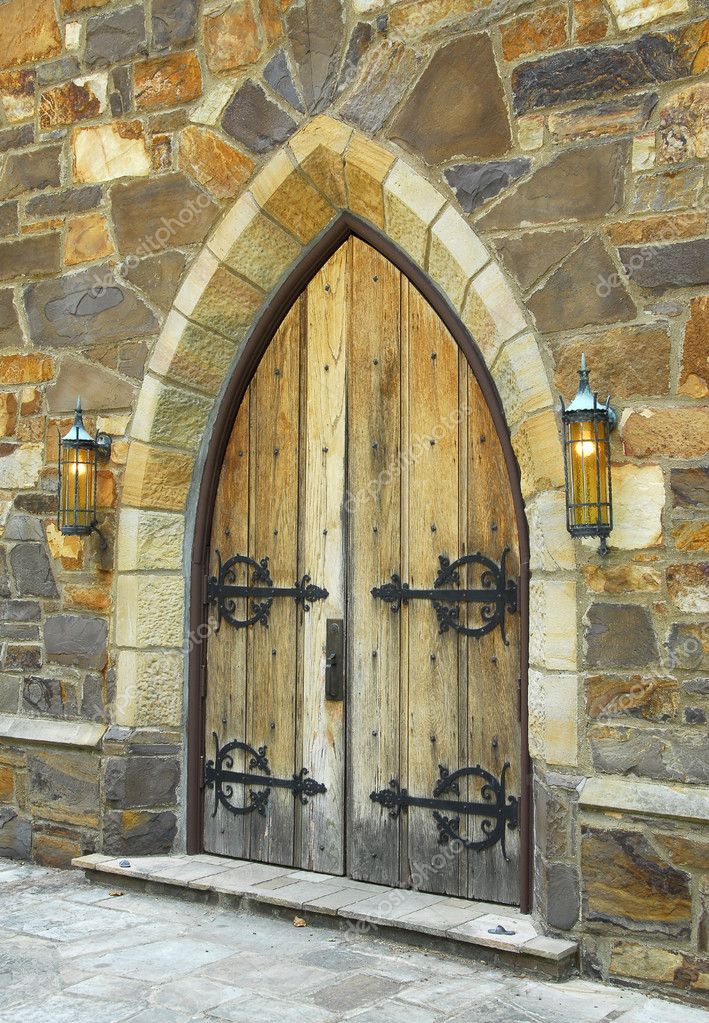
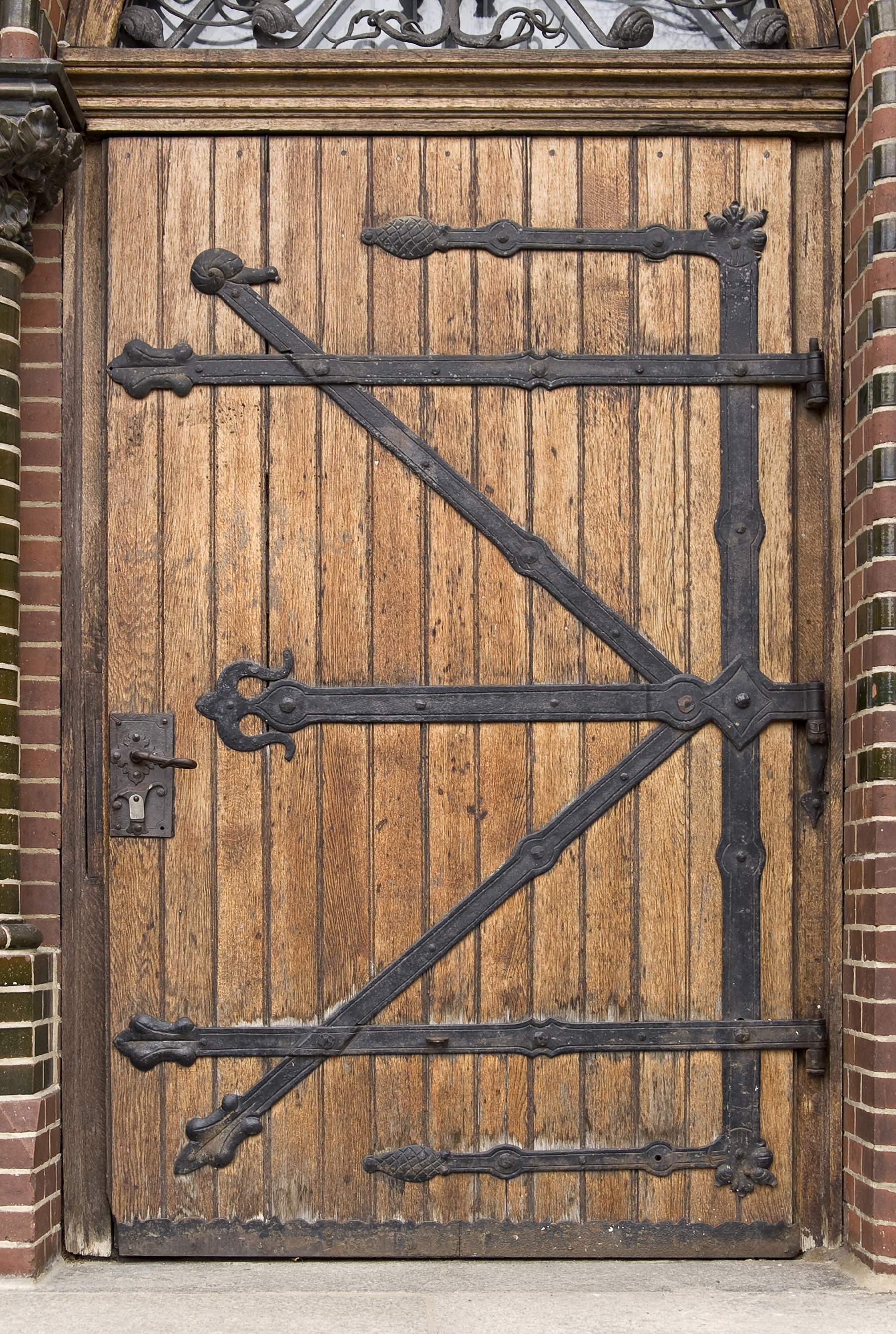
A door can say a lot about where you are entering and also where you are. While many game books focus on the action in their illustrations, too few give a close look at the details of architecture, particularly doorways, A quick Google search of Medieval doors will give you an amazing selection of what you can show to spice up any situation when an adventuring party comes to an opening. Here are some favorites of my own even though some are merely modern renditions or interpretations of how they should appear. Try kicking in a few of these!
Thursday, October 13, 2011
Tuesday, October 11, 2011
Best Fantasy Setting Sourcebooks?
Chris Flood, over on RPG Geek, has begun a thread regarding the "Best Fantasy Setting Sourcebooks" using a composite rating system. He has included the following caveat -
Check it out and see how it stacks up to your own opinions.
Although most of these are D&D settings, that game is not necessarily the best fit for them. If you've got a favorite generic system (. . .) by all means, use it for any or all of these settings. I've tried to take it a step further by suggesting systems that would specifically enhance the feel of the setting it's paired with.
Check it out and see how it stacks up to your own opinions.
Sunday, October 9, 2011
Learning about Caves and Caverns
If you are going to make some cavernous setting locations available for exploration, it doesn't hurt to do a little research about how they are formed, what naturally occurs in them in regard to obstacles and dangers, and, of course, plant and animal life. There are a lot of free resouces online, of course, and few more reputable than NOVA. Check out some of their slideshows and videos for inspirarion.
Friday, October 7, 2011
The Inventions of Flavor
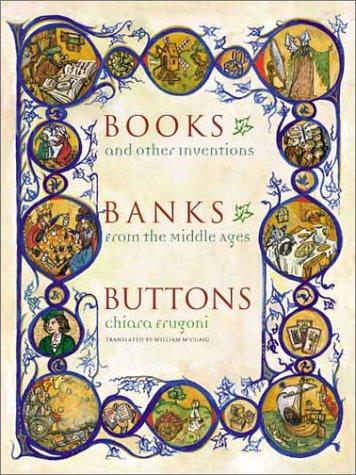
Every once and a while, and then some, I run across a book I hadn't even heard of that is useful for adding flavor to a Medieval Fantasy campaign or setting. Recently in a resale shop, I found an English translation of an Italian book on Medieval inventions. It doesn't cover everything, but it cherrypicks some very cool devices and elements that show how the Middle Ages shouldn't be looked upon as an era devoid of progress. Not everything prior to modern times was invented either by the ancients or in the Renaissance. Chiara Frugoni is a well-respected Italian historian whose books like A Day in a Medieval City should be standard reading for any Game Master. The book I am touting, though, is Books, Banks, and Buttons and Other Inventions from the Middle Ages (also available in softcover). I'll let you check the reviews on Amazon but know that I have enjoyed it, too, and recommend it as well.
Wednesday, October 5, 2011
Revisiting Robert E Howard
I've been reading over some old Conan books lately, and checking out some newer more faithful editions/ Maybe I am just more forgiving than a lot of fans but I'm not particularly put off by the work of L. Sprague de Camp or Lin Carter from the famous, or infamous, ACE books series of the Seventies. Those were my introduction to Conan in those early days, along with their iconic Frazetta covers, so perhaps that makes me more immune to the liberties other authors took with Howard's work. Of course, I have read Howard's stories since in their unadulterated form, and they are better in many respects, but I cannot help but wonder if they would have come to such prominence in modern times if not for de Camp fanning the flames of the genre and particularly of Howard's Conan, often through de Camp's Amra zine, for so many years. As I read more of the stories again, I'll discuss what aspects make for good use in tabletop roleplaying game campaign settings, and how to help make the transition from the written page to the tabletop without taking away form the game aspect, that is, without restricting or railroading the play characters in the process.
Monday, October 3, 2011
Two Cents on Making Sense
In a recent EN World thread, Kaodi asked if architecturally sensible locations helped make tabletop roleplaying games better grounded for the players. I responded as follows.
As much as I hate to generalize about types of gamers (and gaming styles), allow me to do just that even though I will specify that these types of gamers (and styles) can become one another over time, sometimes can even become one another from one session to the next, so heed that advice while thinking over the following . . .
In my experience dungeons that make sense are easier for logic-minded players to handle and overcome. I also know that in such situations a little bit of surprise goes a long way. Non-logic-minded players seem to be more surprised by even things I tend to think logical, but also seem to need more depth in the encounters individually. But dungeons that make sense are not always a matter of architecture.
To give some quick examples to the point, I was recently revisisting Eric Noah's RPG pages and saw some maps that will help illustrate what I am posting. Eric Noah, for some newer EN Worlders who might not realize, ran a site that was the progenitor for this website, hence the E. N. in EN World (and the E. N. in ENnies, which I am proud to say I first suggested). Since the Mid-Nineties he has kept a journal of his campaigns online here including maps that people can grab and use for their own campaigns if they like. Hopefully, he will not mind my using his efforts for my examples to follow.
Notice, for instance, the dungeon maps for the Multilevel Tomb. Most of the twelve levels utilize but a single map -
Most Levels of the Tomb
These levels don't vary in architecture at all though adventurers might find very different inhabitants within the various chambers on each level, many that might or might not make sense. However one level, though originally the same, has been added to by "The Wolf Tribe" who has carved out grottos to suit their purpose -
Level Six
Adventurers that first discover these changes when exploring the levels one by one will definitely feel a thrill at the differences but that's as much because of the otherwise sameness of the whole.
Alternately, though for similar reasons, the Caves of The Red Tooth Tribe seem chaotic in comparison. However, if one were to see the write up for the following map, I'd imagine that it is divided into sections where different activities and purposes are at hand and adventurers would discover a rhyme and reason to the hodgepodge of tunnels and chambers. There would be chambers to raise the young, sleeping chambes, an armory and weapon storage, training areas, places to prepare and cook food, etc. When the adventurers begin to see the places and patterns, it will all make good sense.
Red Tooth Tribe Caves
So, while the architectual design can make sense, as in the first maps, their usage at the time when adventurers explore tham can be quite chaotic, and the reverse can also be true of rambling dungeons where the inhabitants are primarily all working toward a single purpose. I see a lot of the same adventure design in Eric as I have had myself over the years. I tend to err toward the end of making things "Pretty of Purpose," when appropriate, but to honor the history of a location with appropriate architecture as necessitated by the earliest inhabitants, if they were so skilled.
As much as I hate to generalize about types of gamers (and gaming styles), allow me to do just that even though I will specify that these types of gamers (and styles) can become one another over time, sometimes can even become one another from one session to the next, so heed that advice while thinking over the following . . .
In my experience dungeons that make sense are easier for logic-minded players to handle and overcome. I also know that in such situations a little bit of surprise goes a long way. Non-logic-minded players seem to be more surprised by even things I tend to think logical, but also seem to need more depth in the encounters individually. But dungeons that make sense are not always a matter of architecture.
To give some quick examples to the point, I was recently revisisting Eric Noah's RPG pages and saw some maps that will help illustrate what I am posting. Eric Noah, for some newer EN Worlders who might not realize, ran a site that was the progenitor for this website, hence the E. N. in EN World (and the E. N. in ENnies, which I am proud to say I first suggested). Since the Mid-Nineties he has kept a journal of his campaigns online here including maps that people can grab and use for their own campaigns if they like. Hopefully, he will not mind my using his efforts for my examples to follow.
Notice, for instance, the dungeon maps for the Multilevel Tomb. Most of the twelve levels utilize but a single map -
Most Levels of the Tomb
These levels don't vary in architecture at all though adventurers might find very different inhabitants within the various chambers on each level, many that might or might not make sense. However one level, though originally the same, has been added to by "The Wolf Tribe" who has carved out grottos to suit their purpose -
Level Six
Adventurers that first discover these changes when exploring the levels one by one will definitely feel a thrill at the differences but that's as much because of the otherwise sameness of the whole.
Alternately, though for similar reasons, the Caves of The Red Tooth Tribe seem chaotic in comparison. However, if one were to see the write up for the following map, I'd imagine that it is divided into sections where different activities and purposes are at hand and adventurers would discover a rhyme and reason to the hodgepodge of tunnels and chambers. There would be chambers to raise the young, sleeping chambes, an armory and weapon storage, training areas, places to prepare and cook food, etc. When the adventurers begin to see the places and patterns, it will all make good sense.
Red Tooth Tribe Caves
So, while the architectual design can make sense, as in the first maps, their usage at the time when adventurers explore tham can be quite chaotic, and the reverse can also be true of rambling dungeons where the inhabitants are primarily all working toward a single purpose. I see a lot of the same adventure design in Eric as I have had myself over the years. I tend to err toward the end of making things "Pretty of Purpose," when appropriate, but to honor the history of a location with appropriate architecture as necessitated by the earliest inhabitants, if they were so skilled.
Saturday, October 1, 2011
RPG World Building - According to Samwise7RPG
Back in July of 2010, Samwise7RPG of YouTube fame put together a series of five vlogs on RPG World Building and Setting Creation that I thought I'd share with my readers here. Enjoy!
Subscribe to:
Posts (Atom)